
Public proof / Godot
Semantic control, all the way into the editor.
Semwright traversed its full broker route into a real Godot editor session, inspected the authored Parcel Lantern scene, exercised a semantic mutation, preserved consent boundaries and proved cleanup by clean restart.
9ecf35fd9c3dFull route
The broker stayed in the path.
The first-party Godot route can preserve typed semantic control through the broker, policy layer, sandbox, sealed authorities and EditorPlugin bridge without turning the editor into arbitrary coordinate automation.
- 01Semwright CLI
- 02semwrightd
- 03broker and policy
- 04sandboxed first-party Godot driver
- 05Host-mediated loopback
- 06Semwright Godot EditorPlugin
- 07Godot 4.7.2
Merged-SHA acceptance
- Semantic operations
- 10
- Nodes before restart
- 130
- Nodes after restart
- 130
- Project validate
- ConsentRequired
- Node remove
- ConsentRequired
- Scene hash drift
- None
Every accepted operation reported driver:godot, policyallow and driver provenance. Destructive operations were not forced through: their confirmation boundary remained intact.
Visual context
Same scene bytes. Different evidence role.
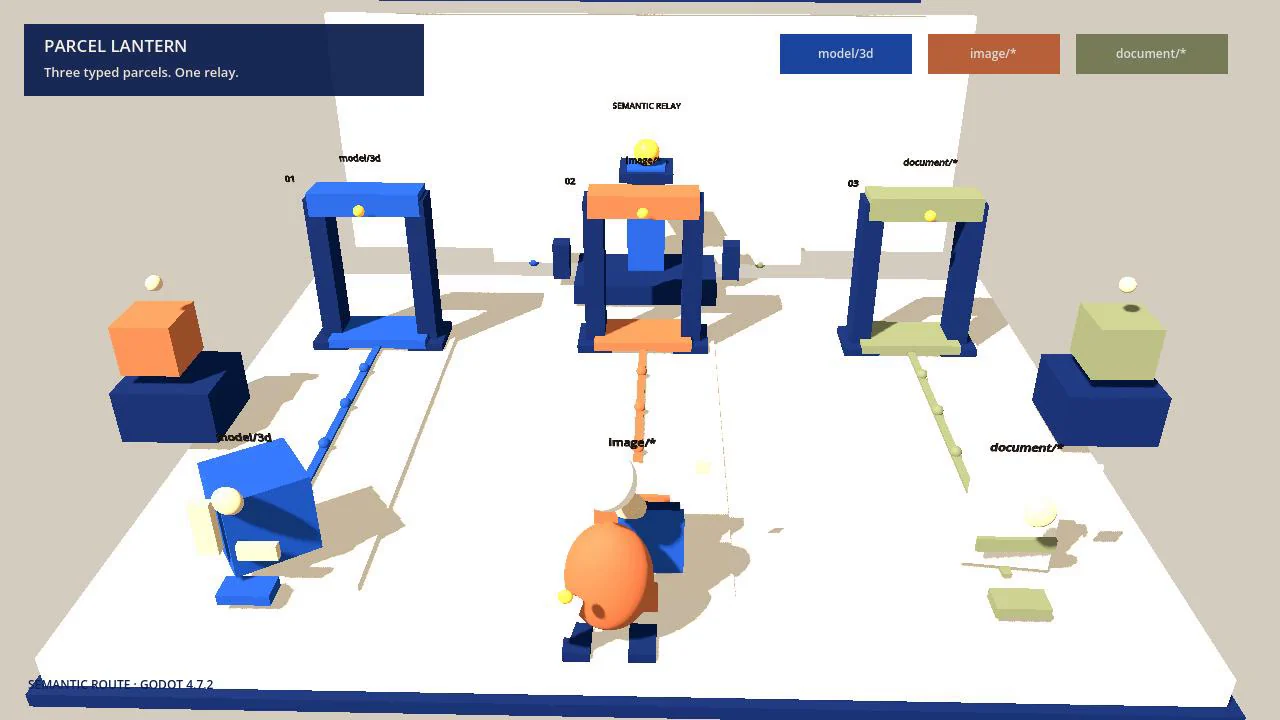
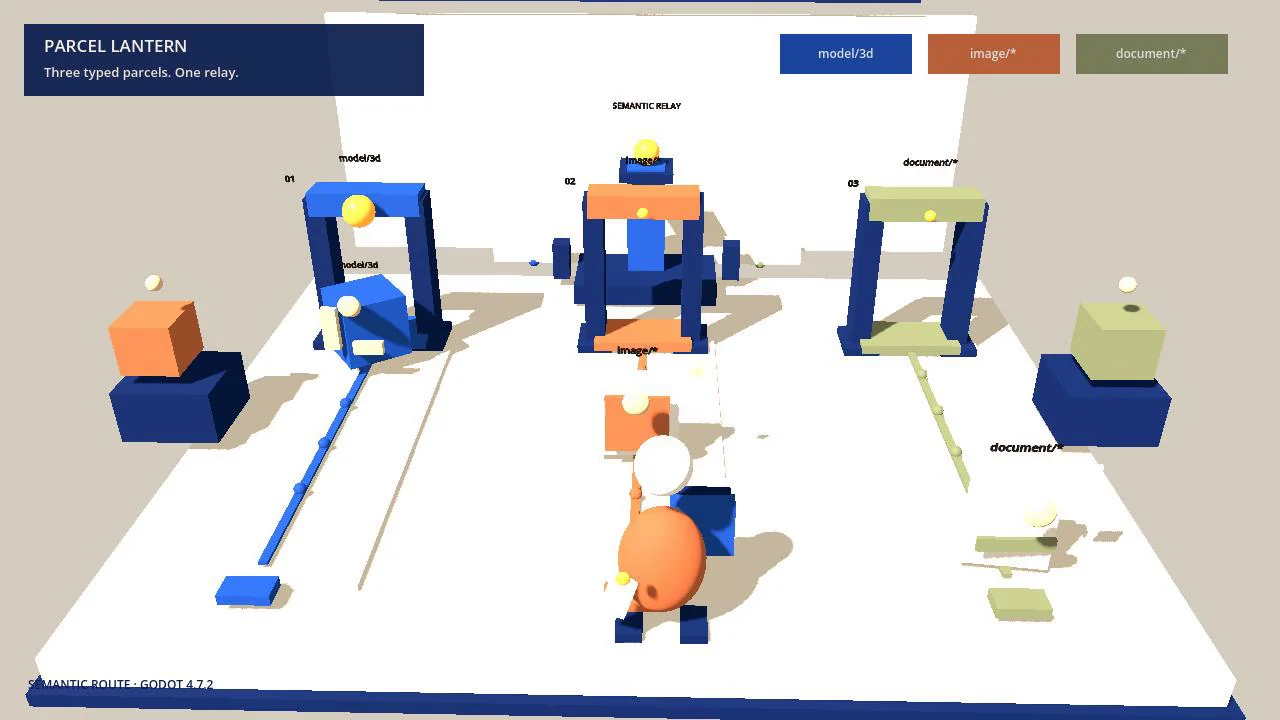
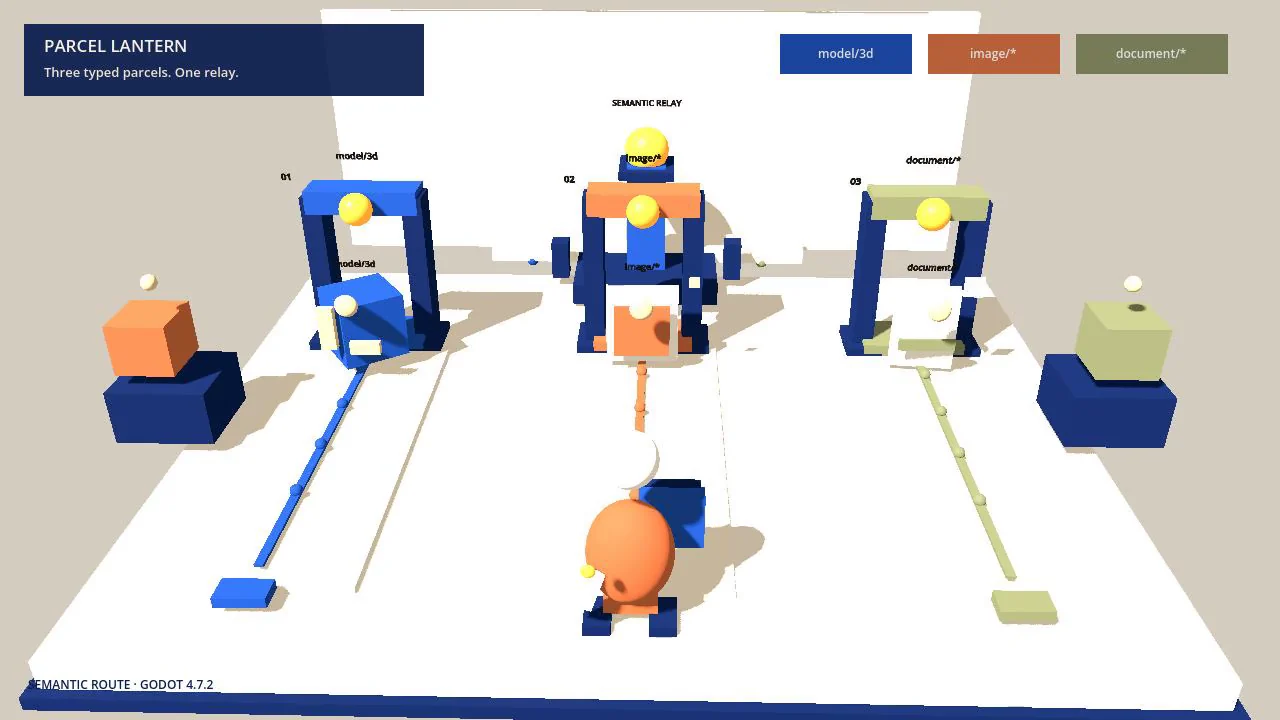
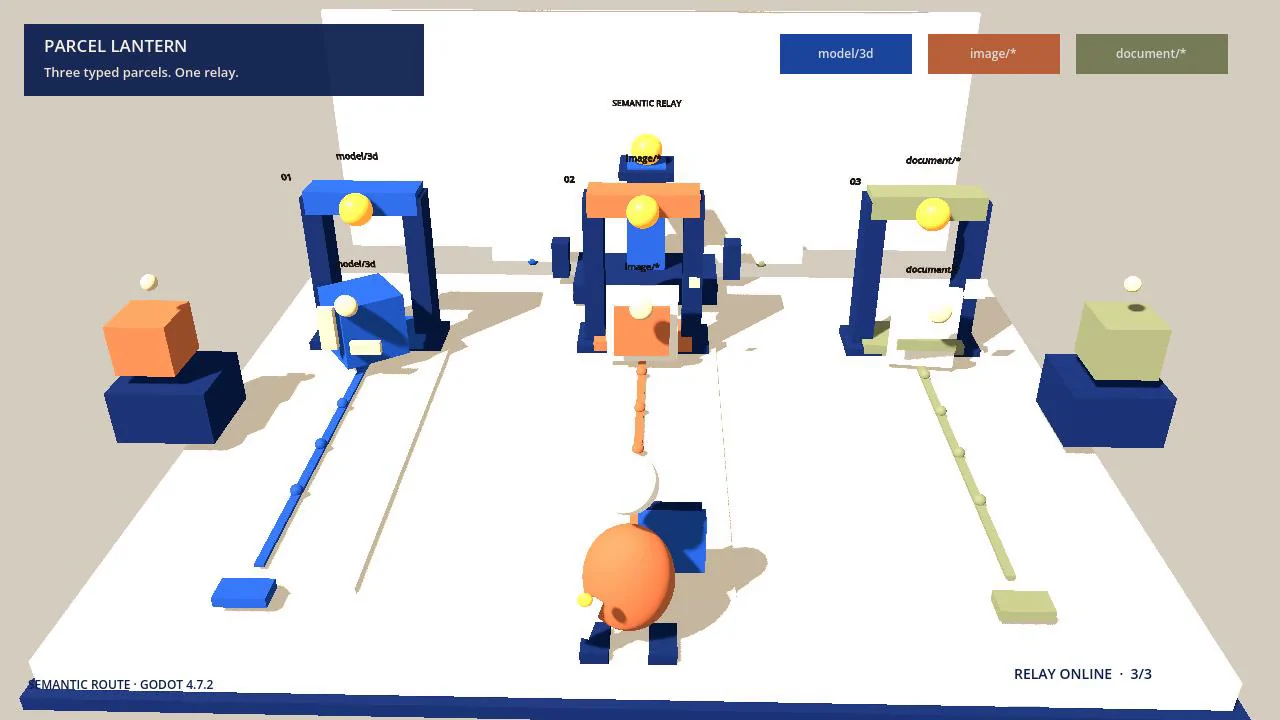
The preview below was rendered from the exact .tscn bytes whose SHA-256 matches the merged-SHA proof workspace. It helps evaluate the artifact visually, but it is intentionally not presented as the execution receipt.
Bounded claim
What this proof does not say.
This proof is pinned to Godot 4.7.2 and the recorded scene. The visual preview comes from the same exact scene bytes but is visual context, not the execution receipt. movie.capture is not claimed as part of the final proof because it remained consent-gated in media QA.
The final run also excludes the auxiliary driver.godot.doctordiagnostic from its acceptance criteria. Authenticated session discovery, project and scene inspection, semantic mutation, policy boundaries and clean restart are the proof surfaces.